百合/やおい
Yuri/Yaoi
I was never really into romance stories.
I obviously enjoyed seeing good queer relationships in media, but I didn't really consume media where the romance was the main plot.
(i did always like slice of life tho which is basically just romance, even when it's not)
For the longest time, the only romance manga I read were Nagabe's works and the occasional twitter webcomic series.
When I was younger, most of the romance I even somewhat cared about was Yaoi(boys love).
Since I'm AMAB(assigned male at birth), I only wanted to be romantic with- and engage with romantic media about guys because I didn't want to fit into heteronormative expectations.
At the time, I obviously didn't know this. I just thought it was my preference.
However, over the years I learned that that very much isn't the case.
Back to talking about manga...
One day, I made a MangaDex account since I read stuff on there in the past and decided to look for manga to save because I wanted to read more again.
I was just looking through the best rated manga when I decited to check out Bloom into You and got hooked immediately.
Since then I've been enjoying reading yuri occasionally.
ー ー ー ー ー ー ー ー ー ー ー ー ー ー ー
やがて君になる
Bloom into You

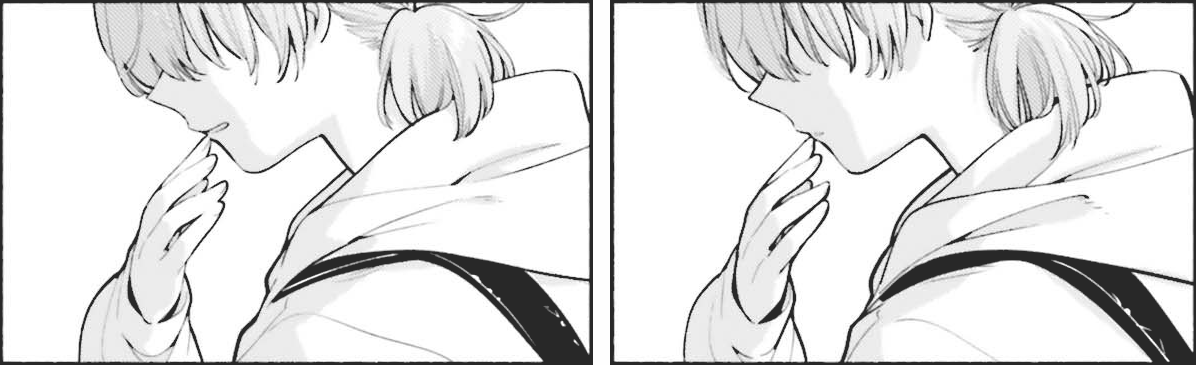
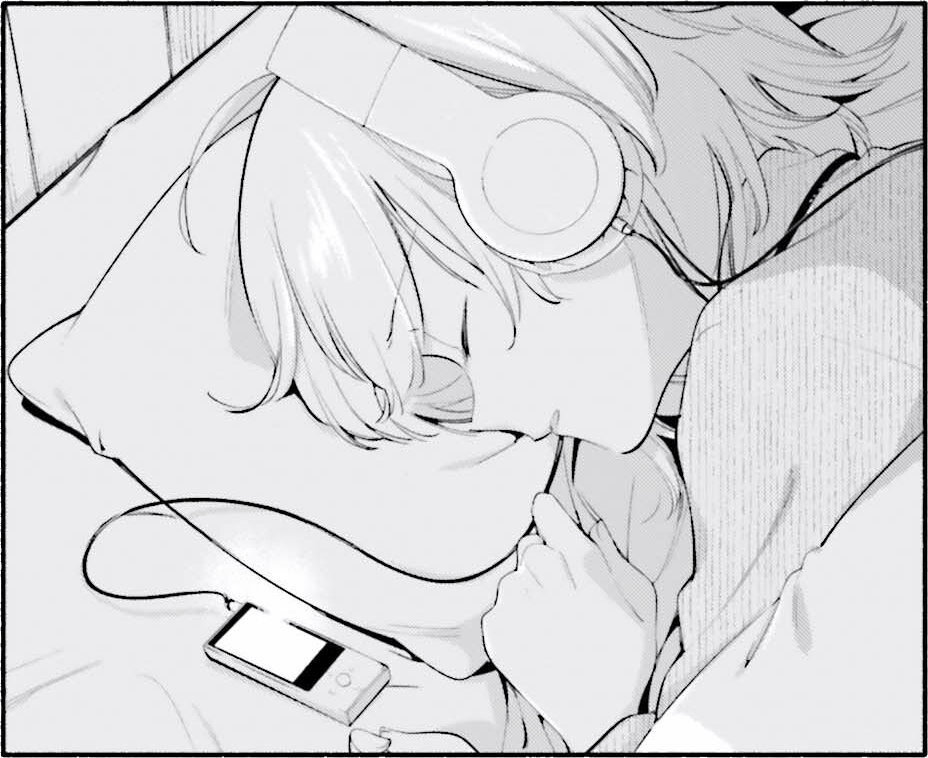 Yuu Koito always dreamed of living a love story akin to the shoujo manga she reads, but she's never been able to fall in love.
One day she comes across Touko Nanami who has also never fallen in love before, but suddenly confesses that she fell in love with Yuu after they spent some time together.
The manga follows their relationship as they try to understand themselves and their feelings for each other better.
It hooked me immediately because it reminded me of my own experiences.
I've rejected pretty much everyone who ever confessed to me while desperately looking for someone who I'm interested in at the same time.
-SPOILER WARNING-
When it was explained that Nanami couldn't reciprocate the feelings of people loving her because her self hatred makes anyone interested in her unappealing to herself, I felt a little called out.
As a trans person, I've caught myself often rejecting people because I thought their interest in me was only based on a perception that's built on aspects that I want to change so desperately.
I'm not interested in them because they are interested in a person I resent.
I also just struggle a lot with dysphoria and find it hard to understand how someone could even find me attractive at times. (but that's a topic for my therapist)
It feels like, because of the way I look and sometimes act, they see me as an opportunity to date someone that's not actually me.
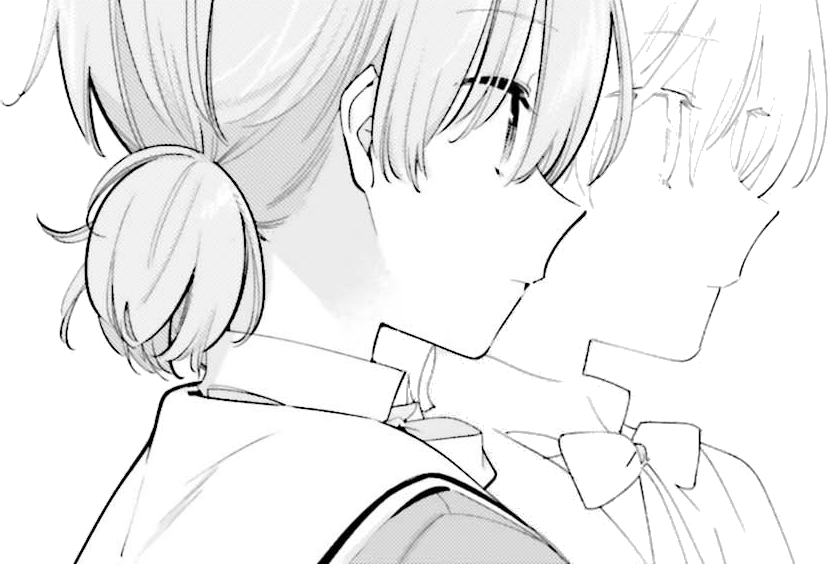
I didn't expect the manga to lean so heavily in the direction of learning to allow yourself to exist and basically building your own personality from the ground up after trying to be someone else for years.
Like I said, it reminded me of my own experiences.
モノトーン・ブルー
Monotone Blue
 Monotone Blue was the first of Nagabe's manga I read, and for a long time favorite manga overall.
I picked it up at a train station because I remembered hearing about it.
I actually think it was the first romance manga I really read.
I definitely know why it spoke so much to me when it did.
The manga follows Hachi, a guy who's just bored and disinterested in everything around him.
He gets in trouble for his performance in school and doesn't socialize much.
But then he finds interest in Aoi, the new student in his class.
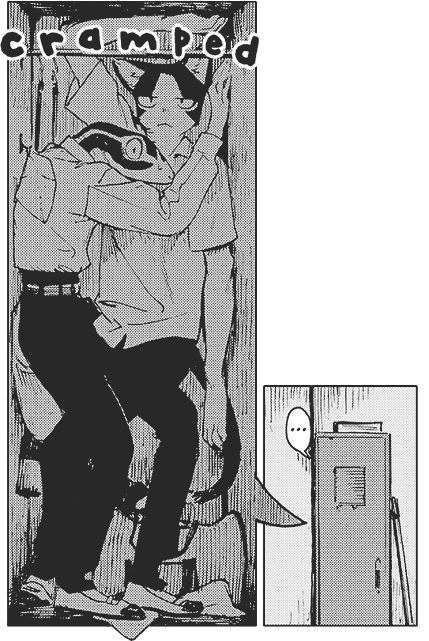
I definitely saw myself in Hachi when I first read it.
Back when I still only wanted to be romantic with guys due to my own struggle with my identity.
Back then, I was acting and thinking a lot like him.
(this was also before i dropped out)
Since it's a Nagabe manga, it's gorgeous as always.
A lot of the dialouge and panels are really cute,
but it still has that Nagabe elegance to it
This manga means a lot to me,
even if I don't feel the same way I did back then when reading it now.
And it's definitely still my favorite oneshot.
It's a oneshot so go read it NOW.

シメジシミュレーション
Shimeji Simulation
 Shimeji Simulation is a yonkoma* manga series by Tsukumizu Yuu, who also made Girls' Last Tour.
The manga follows Shijima Tsukishima/Shimeji's experiences in high school after locking herself in a closet for 2 years due to (presumably) depression and her disdain for middle school.
On the first day, her classmate Majime Yamashita/Shijima decides they should be friends despite Shimeji's disinterest in socializing and friendships.
And it's a completely normal slice of live without any messing around with the fabric of the universe.
Some time after finishing Bloom into You, I was just scrolling the Girls-love tag on MangaDex and Shimeji Simulation's artstyle caught my eye.
Obviously, every manga is hand drawn, but it looks so hand drawn. I love manga that look like this.
The artstyle is sometimes so messy and cluttered in such a comforting and warm way. It's beautiful.
I also really enjoyed the characters and dialogue.
I love how cold Shimeji reacts to Shijima's passion and how chaotic every conversation feels, especially in contrast to shimeji's calm inner monologue.
Shimeji simulation doesn't have an official english translation, which makes sense since a lot of the humor and dialogue only really works in japanese, but the english fan translation does its best to make everything understandable. I think it adds to the charming chaos of it.
Shimeji simulation also has a sort of spring feeling to it which you know I love.
Obviously, some of that just comes from it playing in a more rural area, but I think the artstyle's messiness and visual clutter also just gives a similar feeling to seeing spring overgrowth through the cracks of old concrete.


ー ー ー ー ー ー*4コマ漫画ー ー ー ー ー ー
*Yonkoma manga
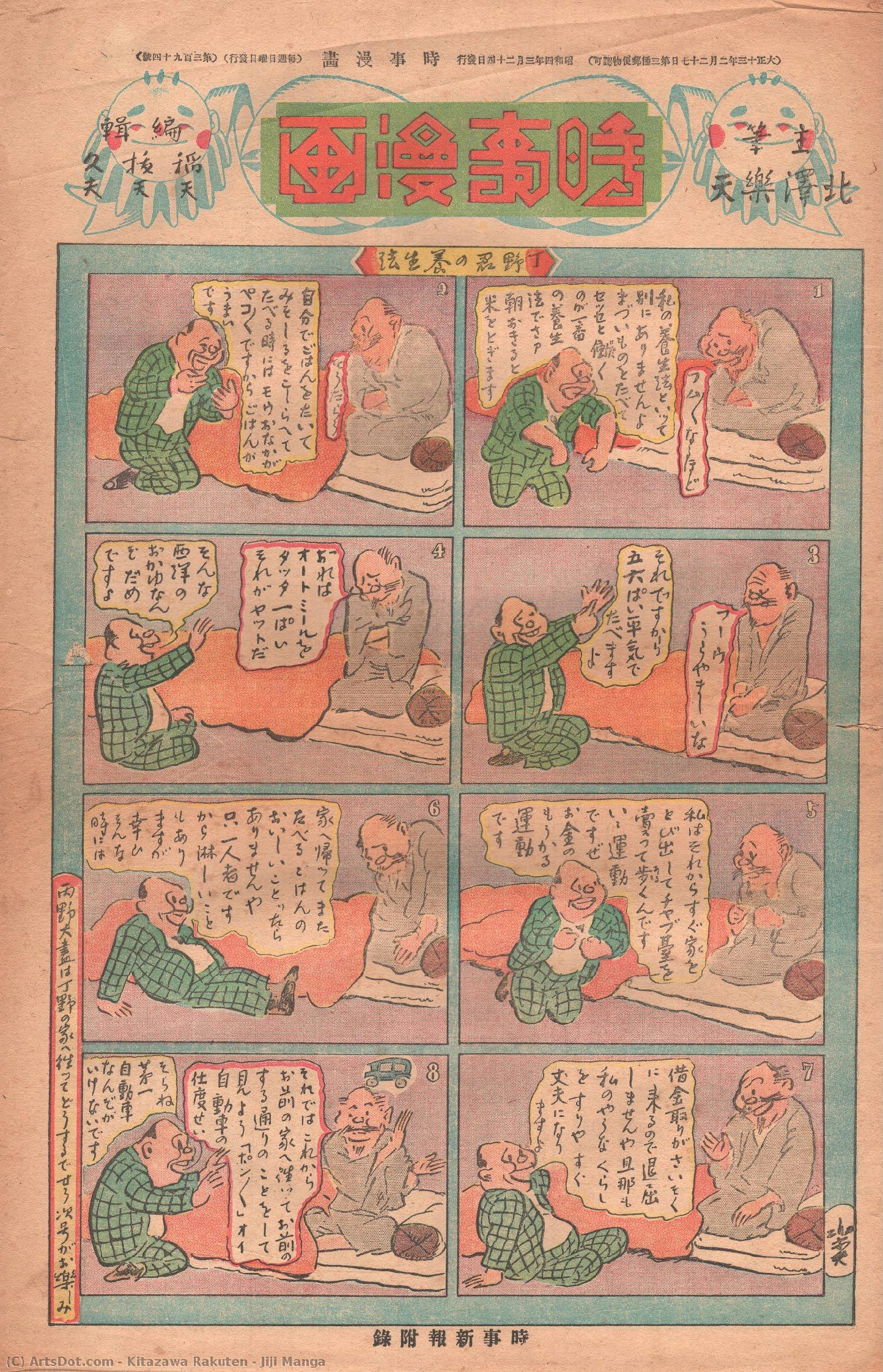
 Yonkoma refers to the panel structure of a manga.
A yonkoma manga (four cell manga/4-koma) is usually structured in sets of 4 panels of equal size that are read vertically.
The yonkoma format is often used to tell a joke over 4 panels using the kishōtenketsu* structure.
The first yonkoma manga, entitled "Jiji Manga", was created by Rakuten Kitazawa as a weekly comic for the Jiji-Shinpo newspaper in January 1902.
The format took insperation from western comic strips.


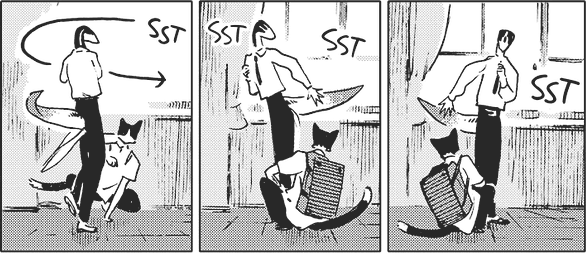
Shimeji Simulation constantly breaks out of the typical yonkoma structure, with characters reach out of panels and layering scenes in front of- and behind the panels.
The inconsistent paneling works perfectly with the artstyle and general feeling of the manga.
It's another layer to this very comforting chaos.
ー ー ー ー ー ー*起承転結ー ー ー ー ー ー
*Kishōtenketsu
Kishōtenketsu (起承轉合/qǐchéngzhuǎnhé in chinese) is a form of story structuring originating in ancient china.
It's speculated that it originated with Li Bai in the 700s, but the first time it was defined as poetry devited in qi, cheng, zhuan, and he was by Fan Heng (1272–1330). (i think)

Kishōtenketsu (/qǐchéngzhuǎnhé) is made up of 4 parts.
In japanese they're named kiku, shōku, tenku and kekku.
Kiku is the introduction, asteblishing the characters and the scene.
Shōku just builds from kiku, setting up for a twist.
Tenku is the climax of the story in form of sed twist.
And kekku is the conclusion.
ー ー ー ー ー ー ー ー ー ー ー ー ー ー ー
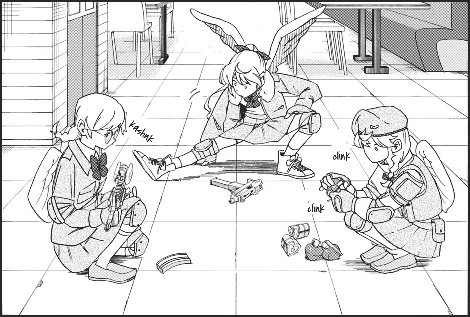
ラブ・バレット
Love Bullet
 cute
cute
idk man, im exausted from writing
just check it out
i'll write about it once i read it more
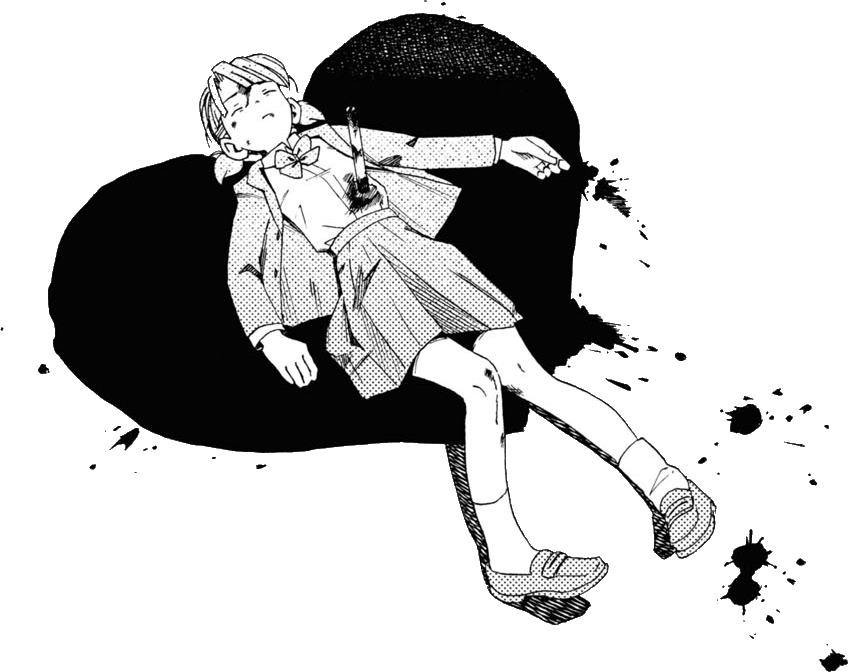
im gay
shocker, i know
